

- Home
- »
- Lake Bogoria National Reserve
Kenya’s Game Reserves
Kenya’s Geothermal Flamingo Sanctuary of Great Rift Valley
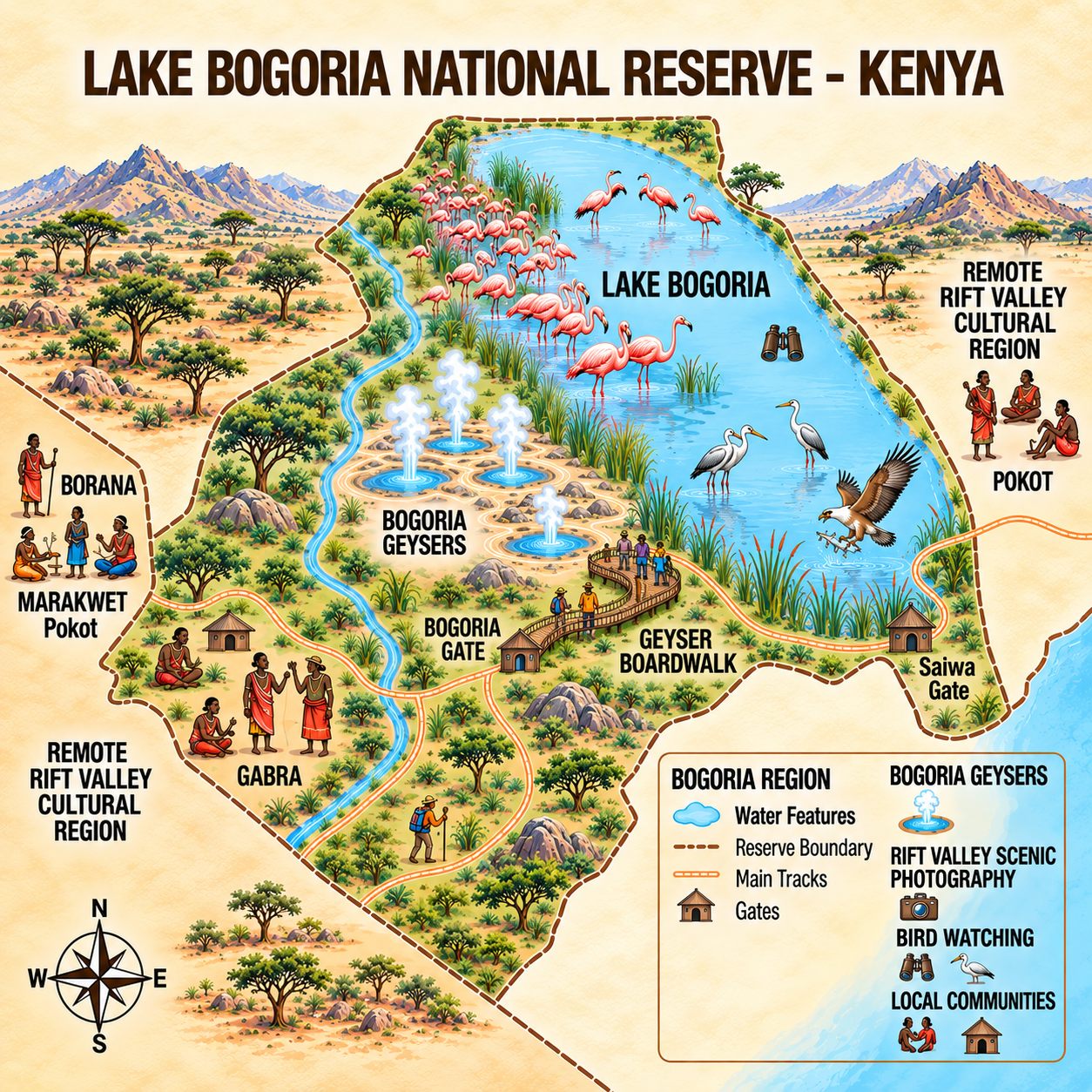
Witness vast flamingo concentrations, dramatic geothermal hot springs and geysers, and stark Rift Valley Scenery from Lake Bogoria National Reserve.
The lake’s deep saline and alkaline composition spurs the growth of blue-green algae, which feeds blue-algae flamingos. About 2 million flamingos rest, breed, and settle in this reserve. This safari destination supports 135 species of birdlife, such as storks, spoonbills, buzzards, hornbills, herons, ostriches, and the sacred ibis.
Total Area
102 km²
Elevation
1000 - 1600 M
Signature Experiences
Visit the Geothermal Paradise of Kenya
Witness Flamingos
Millions of lesser flamingos feed on abundant blue-green algae (Spirulina) against a dramatic backdrop of hot springs and geysers.

Birdwatching Tours

Photography Opportunities

Scenic Escapades
Wildlife Viewing
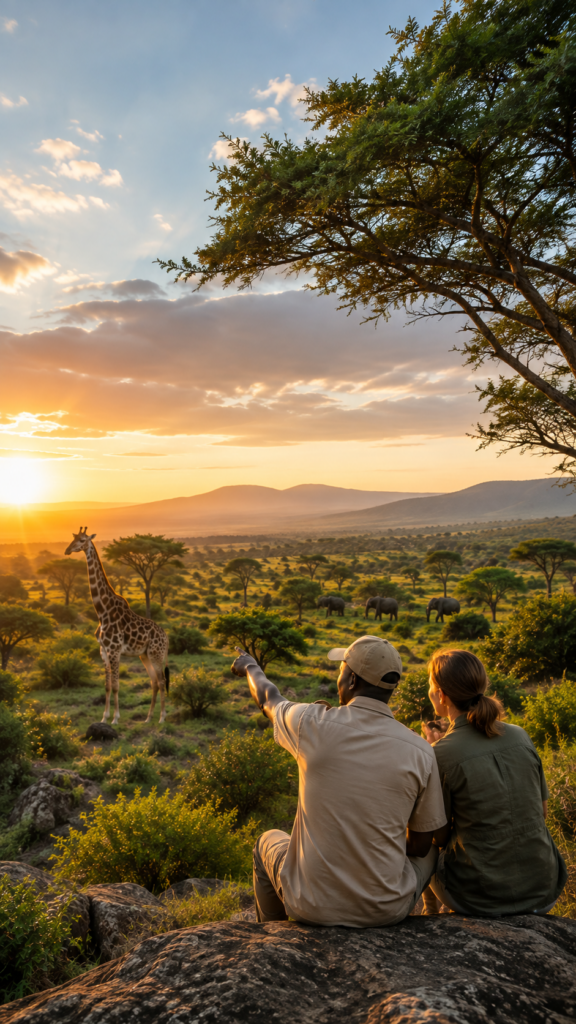
Wildlife sightings are often common around the lake, but not a primary attraction in this geothermal landscape.

Watch Large Mammals

Spot Small Herbivores

Greater Kudu Sights
Hot Springs & Geysers
Boiling springs exceeding 90°C are present, alongside active geysers erupting periodically along the shore.

Visit Hotsprings
Flamingo Flocks
Photography Expeditions
Cultural Tours
Visit native habitats of indigenous communities such as Ilchamus and Tugen, and discover their livelihoods and customs.

Traditional Values

Interact with Tribes

Immersive Expriences
Cycling Tours
Take a bicycle tour around the lake for a better view of the scenery, while cycling past hot springs and boiling geysers.
Immersive Experiences

Solo & Guided Tours
Tour Around the Swamp
Birdwatching
Watch birds beyond flamingos, like pelicans, avocets and stilts, snowbirds and waders, raptors and escarpments.
Photography Opportunities

Immersive Travel

Spot Rare Endemics
Our Commitment
Protecting Kenya’s Geothermal Paradise
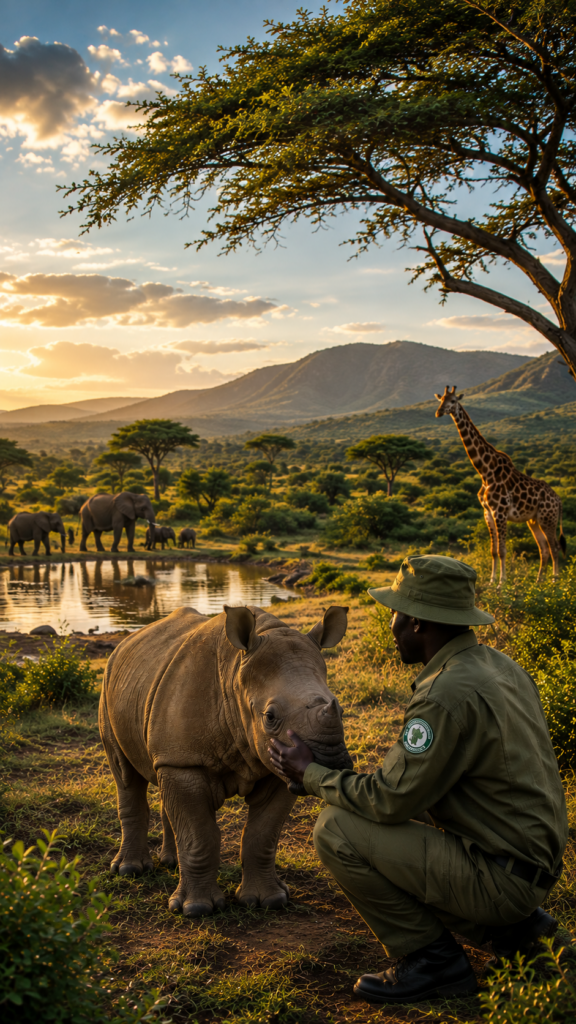
Lake Bogoria National Reserve is a sanctuary for lesser flamingos in Kenya. Our responsible Kenya safaris offer a community-led initiative to protect and preserve natural ecosystems and endangered wildlife.
Sustainable Eco-tourism
Low-impact visitor management ensuring the destination’s delicate balance remains undisturbed for generations.

Local Community Support
Partnering with forest-adjacent villages to create alternative livelihoods and conservation education.
Our Commitment
Responsible Tourism
OUR PURPOSE
Protect Kenyan Species
Kenya Safaris
Frequently Asked Questions.
You can visit Lake Bogoria year-round, but the dry seasons (June to October and January to March) offer the best conditions for wildlife viewing, birdwatching, and exploring the reserve's famous hot springs and geysers. Flamingo numbers vary throughout the year depending on water levels and food availability.
The early morning (6:30–9:30 AM) and late afternoon (3:30–6:00 PM) are the best times to visit. These cooler hours offer the best wildlife sightings, beautiful lighting for photography, and comfortable temperatures for exploring the lake and geothermal features.
Lake Bogoria National Reserve is located about 260 km from Nairobi, approximately a 4–5 hour drive via Nakuru and Marigat. The reserve is easily accessible by road, and many travellers combine it with visits to Lake Nakuru National Park, Lake Baringo, or the Great Rift Valley.
To visit Lake Bogoria National Reserve, you must present a valid passport or government-issued ID at the entrance gate. Entry fees vary by residency status: non-residents pay USD 50 for adults and USD 20 for children (ages 3–17), while Kenyan citizens pay KES 500 for adults and KES 215 for children. Children under 3 years enter free. Your park entry fees are typically included in your safari package and paid in advance for a hassle-free experience.
Yes, visitors can enjoy guided hiking and nature walks along designated forest trails. These walks offer opportunities to explore the reserve's unique ecosystems, observe wildlife, and learn about its rich biodiversity from experienced local guides.
