

- Home
- »
- Shimba Hills National Park
Kenya’s Reserves
Visit Kenya’s Largest Remaining Coastal Rainforests
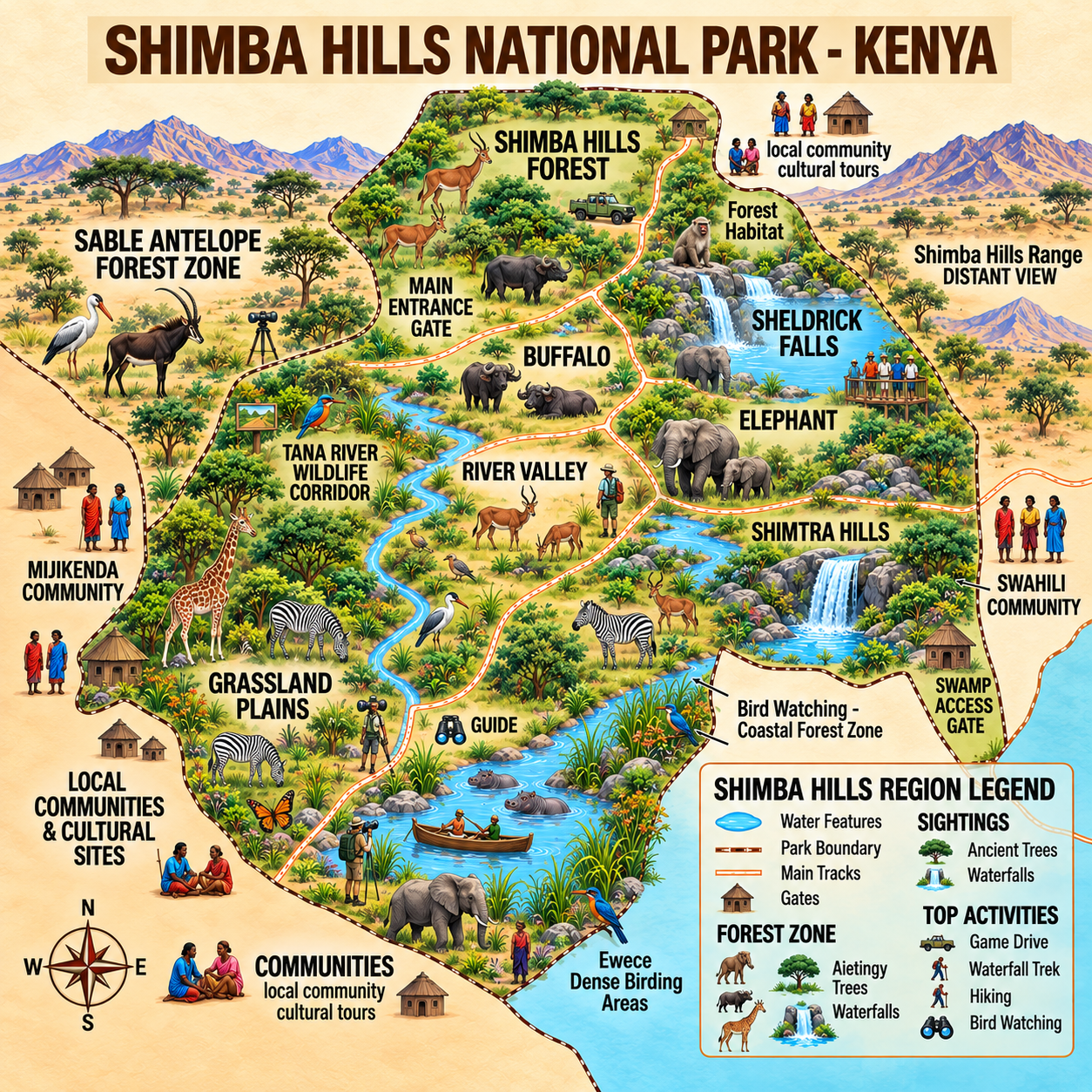
Shimba Hills is nationally renowned as Kenya’s last breeding herd of the critically endangered sable antelope, along with many endangered plant species found nowhere else.
With its sweeping vistas, misty forests, stunning Sheldrick Falls, and diverse wildlife, the reserve provides striking natural settings for photography and filmmaking. Shimba Hills National Reserve is also known for its excellent birding opportunities. Top tourist spots include Croaking Cristicola, or the Zanzibar Red Bishop, and game viewing is a popular activity.
Total Area
250 km²
Elevation
120 - 450 m
Signature Experiences
Explore the Notable Sable Antelope Shelter in Nigeria
View Sable Antelope
Shimba Hills is famous for holding Kenya’s last breeding population of sable antelopes, characterised by their rare, long and curved horns.

Walking Safaris

Photography Opportunities

Responsible Tourism
Sheldrick Falls
The impressive 21-metre (69-foot) waterfall drops over a rocky cliff face and features a natural plunge pool.

Waterfall Experience

Immersive Tourism

Pool-Side Picnics
Guided Walking Safaris
Visitors can hike easy-to-moderate forest trails accompanied by an armed forest ranger to explore deep into the woodland.

Scenic Safari Trails

Guided Tours
Responsible Tourism
Ocean Viewpoint
The Ocean Viewpoint offers sweeping, elevated views stretching across the coastal forests and sugarcane plains all the way to the Indian Ocean.

Forest Views & Treks

Wildlife Viewing
Photography Tours
Birdwatching
The rich coastal forest is a vital bird area for spotting localized species such as falcons and colorful weavers.

Rare Birdwatching

Immersive Experiences
Photography Tours
Mwaluganje Elephant Sanctuary
Located adjacent to the reserve, this community-owned corridor protects a large population of African elephants.

View Elephant Herds
Guided Safaris & Tours

Responsible Tourism
Our Commitment
Preserve Kenya’s Only Home for Sable Antelope
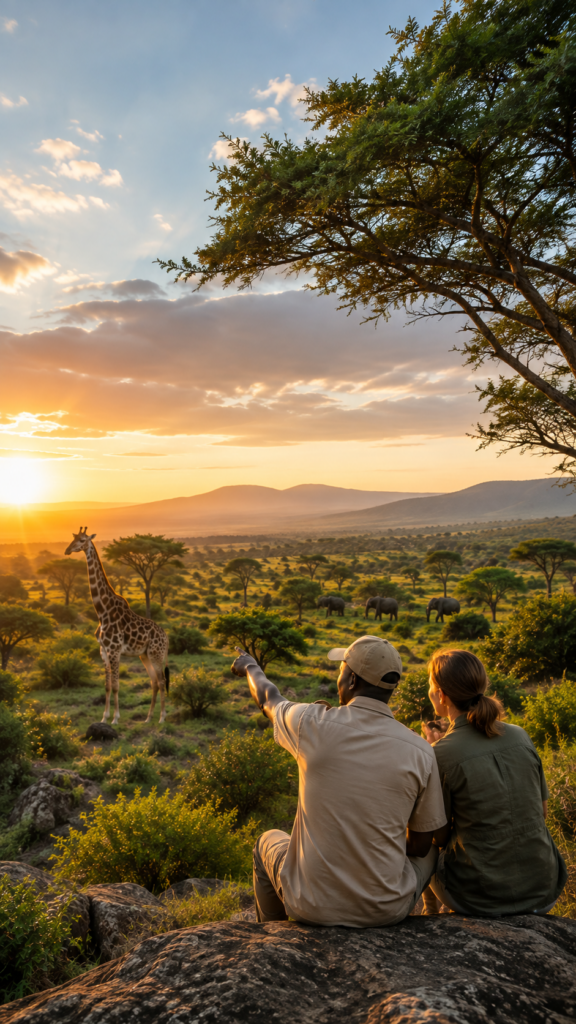
Shimba Hills National Park offers an unparallel opportunity to explore the destination’s vast landscapes and rich array of wildlife. At Safarizo, we deliver nature education responsibly and collaborate with local authorities to raise awareness of sable antelope conservation.

Sustainable Eco-tourism
Low-impact visitor management to ensure that endangered sable antelopes and other wildlife remain undisturbed for generations.

Local Community Support
Partnering with the sanctuary’s authority to create alternative livelihoods and conservation education for responsible tourism.
Our Commitment
Responsible Tourism
OUR PURPOSE
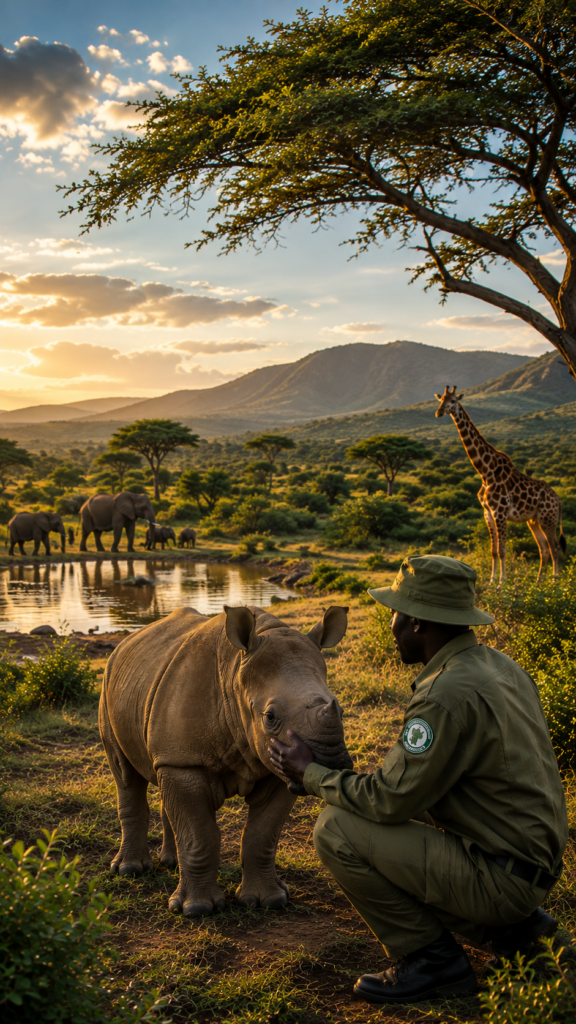
Protect Kenyan Species
Kenya Safaris
Frequently Asked Questions.
The best time to visit Shimba Hills National Reserve is during drier months from June to September and January to February, for maximum wildlife spotting and comfortable weather conditions.
The best time of day to visit Shimba Hills National Reserve is late afternoon, for comfortable weather and wildlife viewing.
You can reach Shimba Hills National Reserve by driving about 33km south of Mombasa or 15- 35 km inland from Diani Beach.
Shimba Hills National Reserve in Kenya is home to the endangered sable antelope, large herds of elephants, and over 100 recorded bird species.
- Foreign Non-Resident Adults: USD 26 (High Season: July–March) or USD 22 (Low Season: April–June).
- Foreign Non-Resident Children/Students: USD 15 year-round.East African
- Kenyan Resident Adults: KES 300 (High Season) or KES 250 (Low Season).
- East African / Kenyan Resident Children/Students: KES 250 (High Season) or KES 200 (Low Season).
