

- Home
- »
- Lake Nakuru National Park
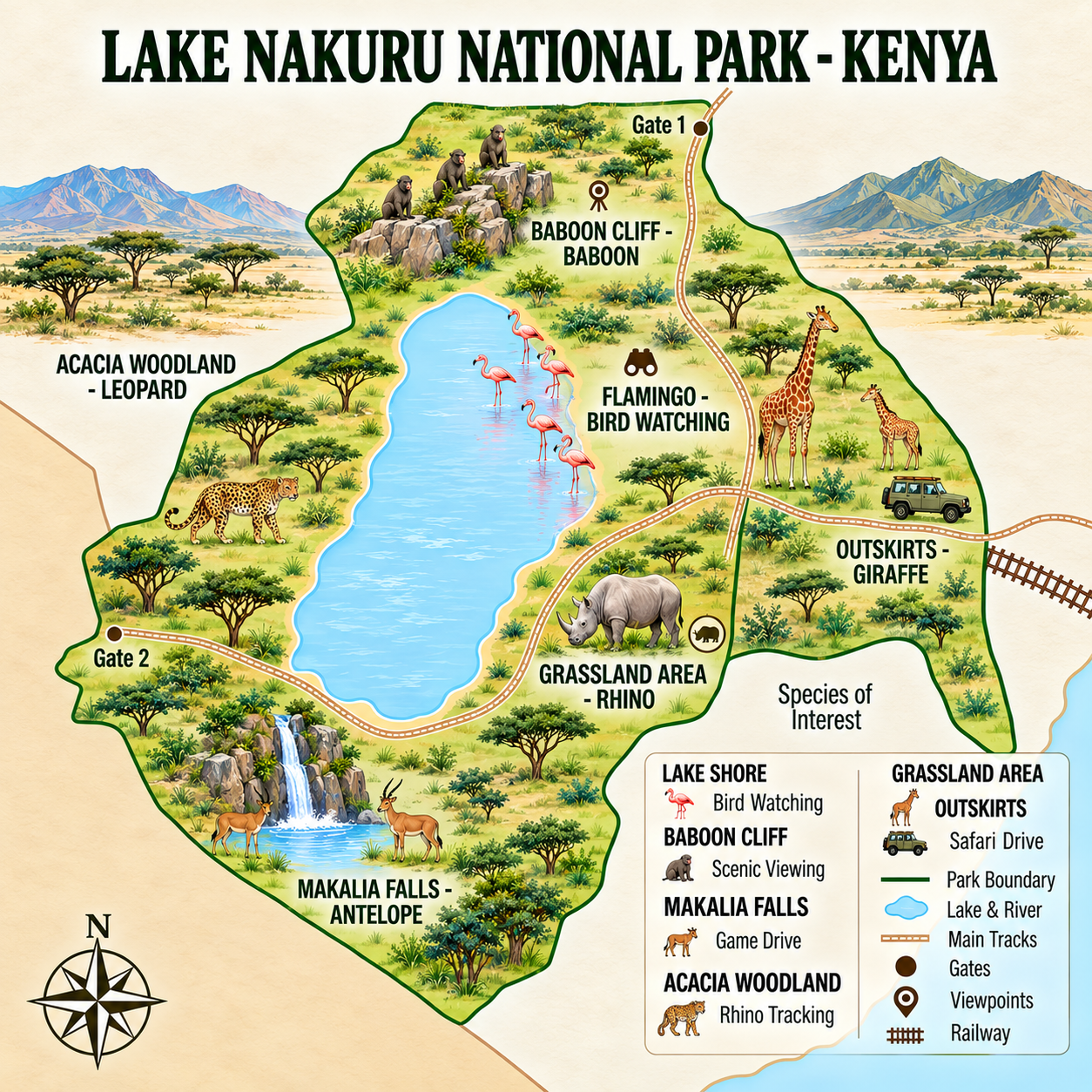
Spatial Heritage
Visit the UNESCO World Heritage Site of the Rift Valley
Lake Nakuru is one of the most famous soda lakes in East Africa’s Great Rift Valley lake system and is the heart of Lake Nakuru National Park.
Over 400 endemic species are indigenous to Lake Nakuru National Park, including the famous flamingos. The park is also home to 100 endangered rhinos, Rothschild’s giraffe, lions, impalas, waterbucks, and 50 other species, making it an incredible wildlife photography hub.
Total Area
188 km²
Elevation
0-1901 m
Signature Experiences
Explore the Rich Diversity of Wildlife in Lake Nakuru Park
Baboon Cliff
A high vantage point providing panoramic views across Lake Nakuru and surrounding grasslands.

Spot Wildlife

Photography Tours

Walking Safaris
Makalia Falls
A scenic hidden waterfall located in the southern part of the park, offering a peaceful spot to relax away from the main tracks.

Waterfall Views

Scenic Escapes
Photography Tours
Rhino Sanctuary
A fenced, dedicated zone inside a protected sanctuary and one of the best places to witness Kenya’s endangered black and white rhinos.

Black Rhinos

White Rhinos

Responsible Tourism
Out of Africa Lookout
This historic viewpoint is named after the famous film and offers a cinematic backdrop and beautiful lake escarpments.
Lakeside Walks
Photography Tours

Private Tours
Hippo Point
This shoreline area is for watching hippos, massive flocks of pelicans, and various other endemic species among flooded acacia trees.

Watch Hippos

Birdwatching
Photography Tours
Lion Hill
A prominent ridge on the eastern boundary known for sweeping vistas and occasional sightings of lions resting among the rocks.

View Wildlife

Hiking Tours
Scenic Views
Our Commitment
Protecting the Lake of Kenya’s Great Rift Valley
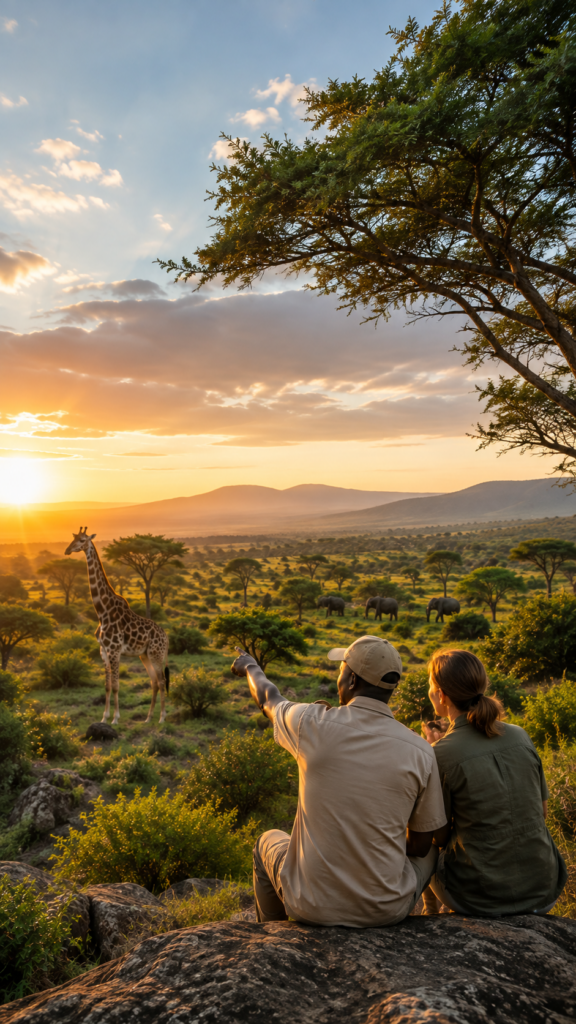
Lake Nakuru National Park is not simply a safari destination; it’s a biodiversity refuge and species-survival stronghold, making it one of Kenya’s most visited national parks. At Safarizo, we partner closely with conservation experts and local people to raise awareness of lion, rhino and giraffe conservation.

Sustainable Eco-tourism
Low-impact visitor management ensures endangered black and white rhinos and other wildlife remain undisturbed for generations.

Local Community Support
Partnering with the national park’s authority to create alternative livelihoods and conservation education for eco-sensitive tourism.
Our Commitment
Responsible Tourism
OUR PURPOSE
Protect Kenyan Species
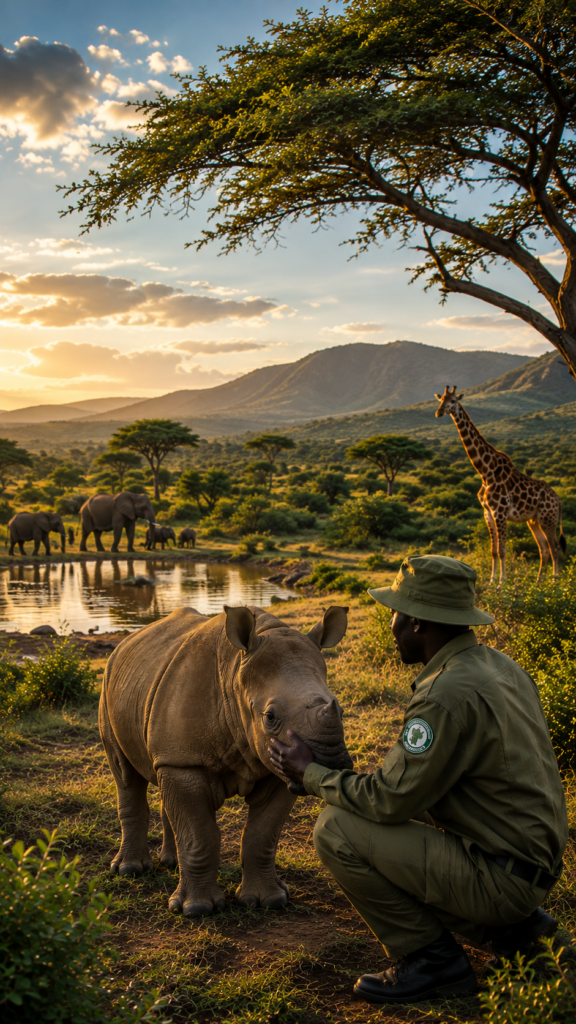
Kenya Safaris
Frequently Asked Questions.
The best time to visit Lake Nakuru National Park is during the dry seasons, from June to October and January to February, because of scarce vegetation, clear weather patterns, and easy-to-spot wildlife.
The best time of day to visit Lake Nakuru National Park is early morning (6:00 AM to 9:00 AM) or late afternoon (3:30 PM to 6:00 PM).
You can reach Lake Nakuru mostly by driving from Nairobi. We will pick you up from your accommodation and drive you to Lake Nakuru and back.
Rising water levels have made the lake deeper and diluted its alkalinity. Flamingo numbers change because sheltering issues, breeding problems and a rising tourist population have reduced their arrival frequency.
You may spot flamingo flocks, but the large numbers you saw before may not be guaranteed.
- USD 90 per person per day
- Non-Resident Children / Students: USD 45 per person per day
- East African Citizen Adults: KES 1,500 per person per day
- East African Citizen Children: KES 750 per person per day
