

- Home
- »
- Nyerere Park
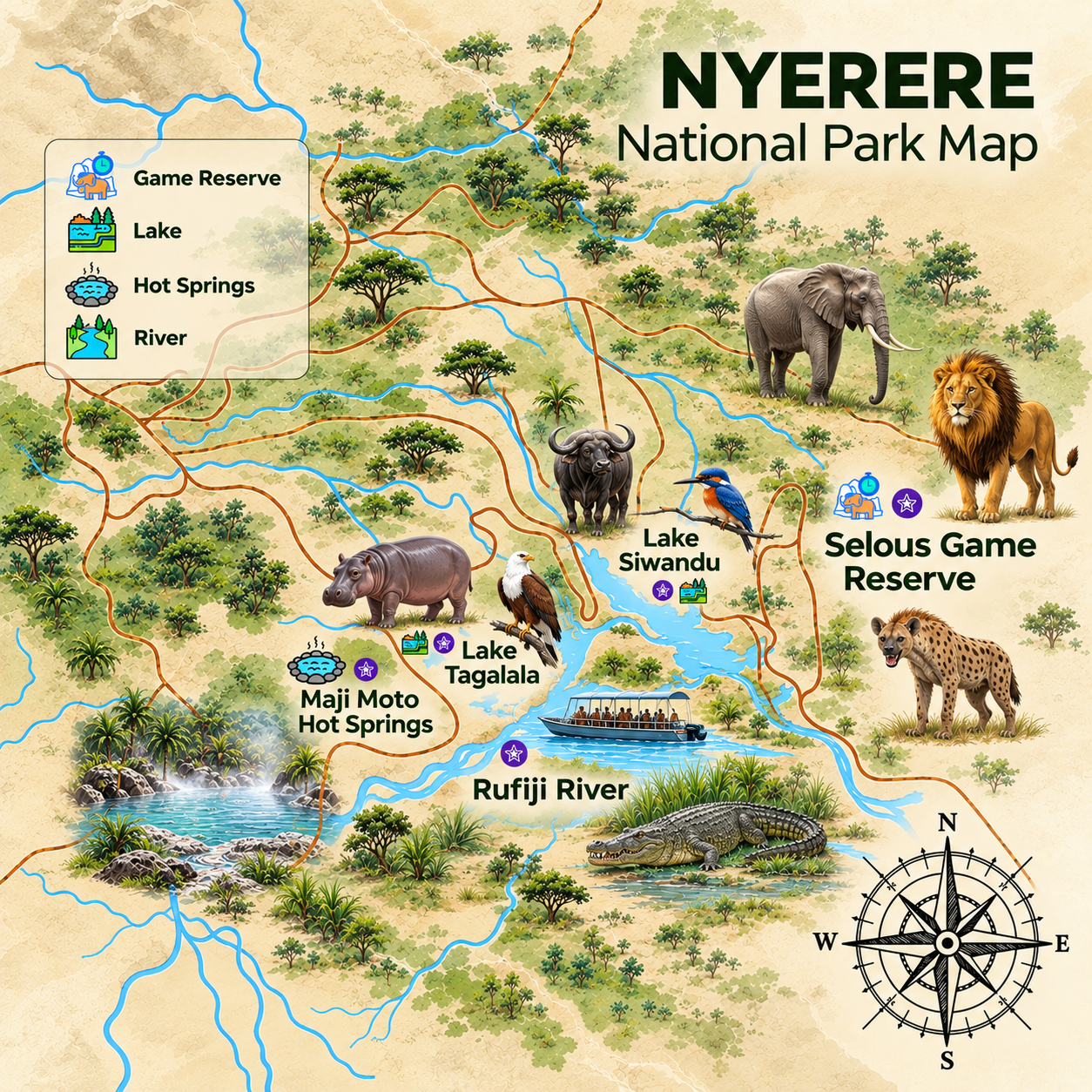
Visit Nyerere Park
Explore Tanzania’s Largest National Park
Nyerere National Park, formerly known as Selous Game Reserve, is among the largest protected safari parks in southern Tanzania.
The park has been recognised as a UNESCO World Heritage site. Travellers can witness a diverse variety of wildlife and unperturbed nature, welcoming you with its dense greenery and scenic views. Along with lions, leopards, crocs, hippos, hyenas, buffalo, zebras, and wildebeest, the national park is home to the endangered black rhino and African wild dogs.
Total Area
30,893 km²
Elevation
35 - 1,450 m
Classic Experiences
What to Do in Nyerere National Park
Wildlife Safari
Spot lions, buffaloes, rhinos, elephants, antelopes, and wild dogs. Enjoy a rare glimpse of cheetahs and black rhinos.

Game Drive

Photography

Walking Safari
Birdwatching Safari
The national park is home to many bird species, including southern ground hornbills, African skimmers, and majestic eagles.

400+ Bird Species

Birdwatching

Scenic View
Walking Safari
On your walking tour to Nyerere, watch the wildlife up close. Explore bush trails under an armed guide’s supervision.

Wildlife View

Early Morning Safari
Scenic Beauty
Boat Ride
Nyerere is one of the renowned safari parks where you can enjoy boating along the Rufiji River. Both hourly and full-day safaris are available.

Boat Safari

Spot Crocodiles

Birdwatching
Photography Safari
The national park has become a hub for photophiles who want to experience wildlife adventures. A wide variety of big cats and elephants make it more scenic.

Herds of Elephants
Scenic View

Photography Safari
Cultural Visits
Don’t miss the cultural tours to the Maasai villages. Deepen your understanding of their culture and traditions.

Maasai Villages

Tribal Culture and Practices

Guided Safari
Our Commitment
Exploring Nyerere National Park Responsibly
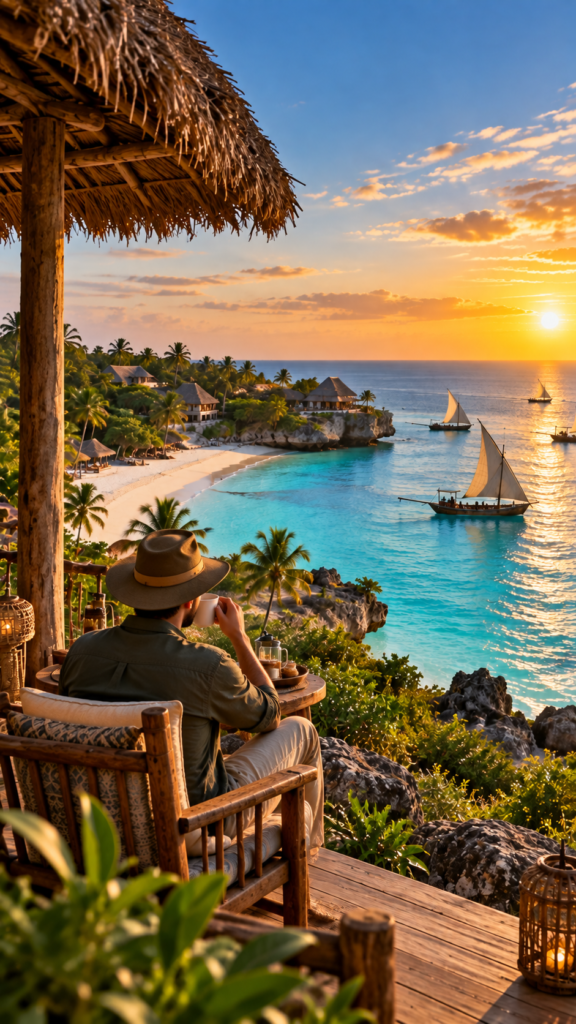
Experience your tour to Nyerere National Park through a wildlife safari to the conservation area. We ensure the wildlife safari journey stays joyful and doesn’t harm nature.

Sustainable Eco-tourism
Low-impact tourist management helps keep the forest’s delicate balance undisturbed for generations to come.

Local Community Support
Joining native communities to create alternative livelihoods and start education and conservation of flora and fauna.
Our Commitment
Responsible Tourism
OUR PURPOSE
Protect Tanzanian Species
Tanzania Safari
Frequently Asked Questions.
The best time to visit Nyerere National Park is the dry season between June and October. The rainy season, between November and April, is best for birdwatchers. The rainy season attracts a range of migratory and native bird species.
Yes, Nyerere National Park is quite safe to visit. Wild animal attacks are rare. Know about wildlife behaviour and safety measures. While on safari, always listen to your safari guide and remain safe.
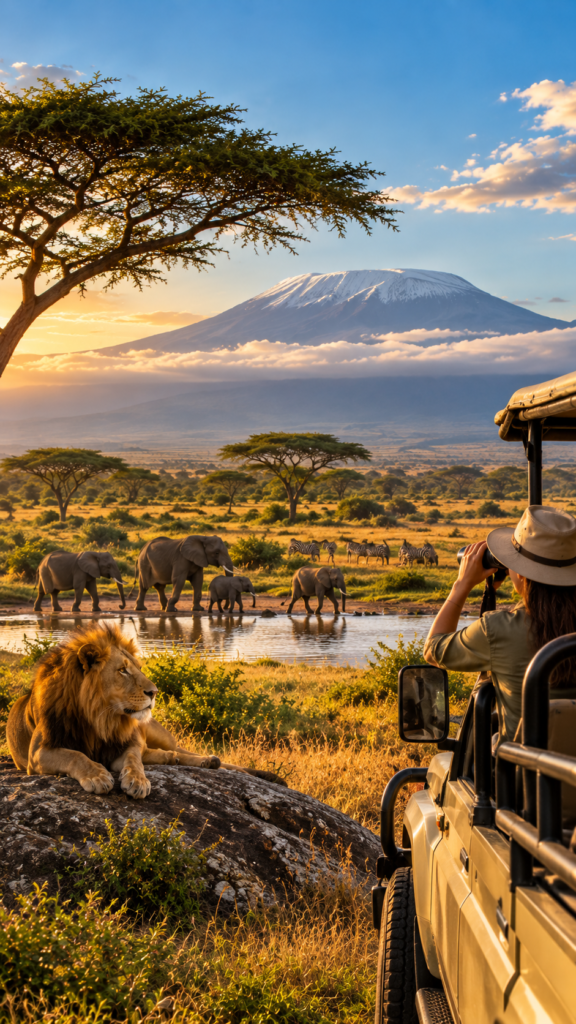
Nyerere is famous for its herds of African elephants. The national park also has wild animals, including lions, zebras, buffalo, and giraffes. You may spot a cheetah if luck favours. You can also see black rhinos. You may have an opportunity to witness the “Big Five of Africa” in Nyerere National Park.
Temperatures drop in the early morning and evening in the national park. Safari travellers must wear warm clothes during game drives. Also, wear cotton pants and comfortable, neutral-coloured clothes on safari. Do carry mosquito repellent.
In Nyerere National Park, you can enjoy game drives, birdwatching, walking safaris, and boat tours.
