

- Home
- »
- Mikumi Park
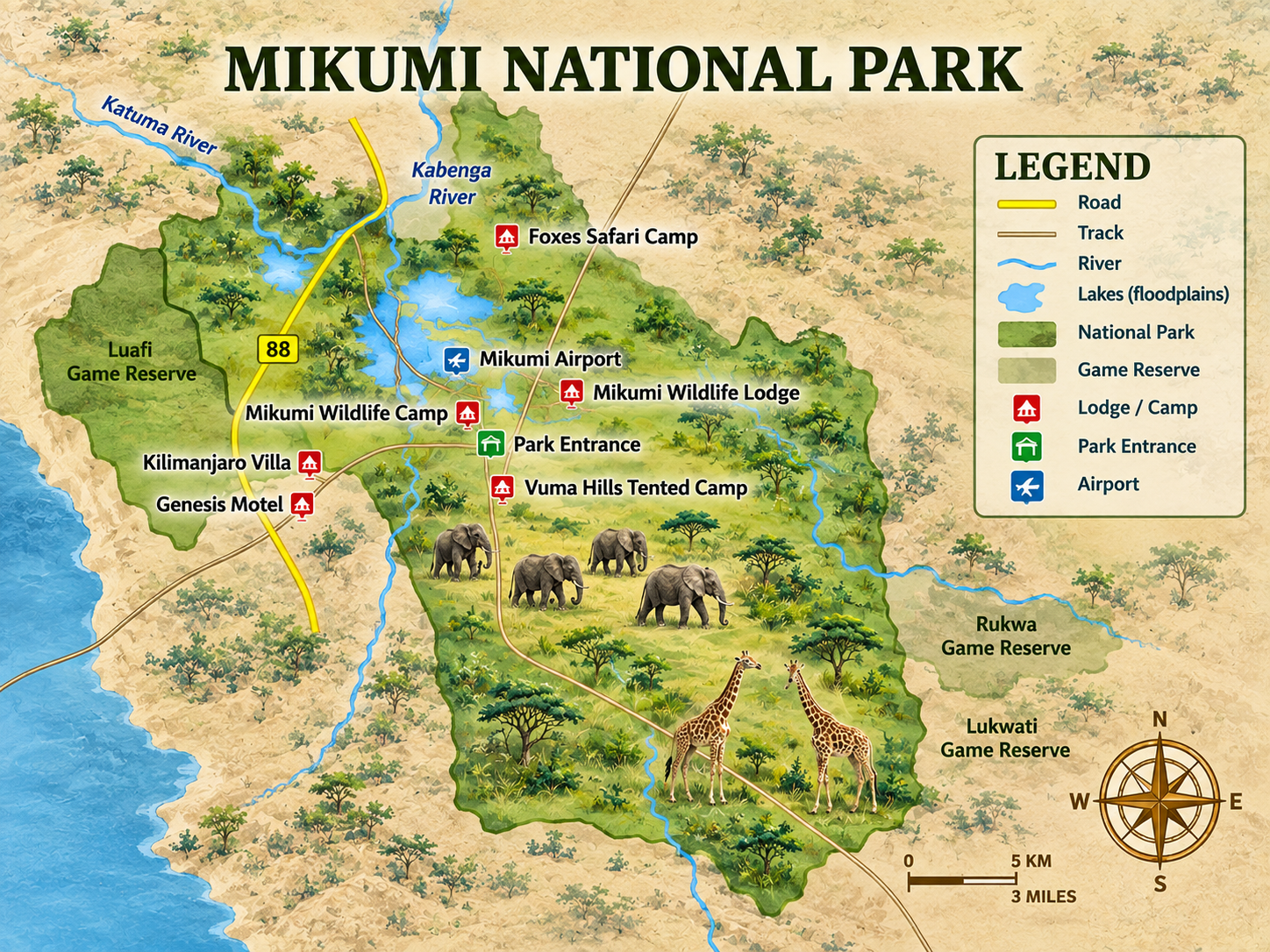
Visit Mikumi Park
Explore the Wildlife in Mikumi National Park
Mikumi National Park is Tanzania’s fourth-largest national park and is rich in wildlife, including lions, buffalos, leopards, elephants, zebras, antelope, and giraffes.
The national park connects to other safari destinations like the Udzungwa Mountains, Ruaha, and Kitulo. The park is also known as “Little Serengeti” for its rich wildlife and open plains. The park offers year-round wildlife viewing, with acacia trees fringing the Mkata River. Tamarind trees attract elephants and giraffes to eat the fruit. The park is home to lions, zebras, giraffes, and elephants. The park is a haven for birdwatchers. It is home to more than 400 bird species, including indigenous and migratory birds such as black-bellied bustards, marabou storks, guinea fowls, bateleur eagles, colourful lilac-breasted rollers, etc.
Total Area
3230 km²
Elevation
500-1250 m
Classic Experiences
What to Do in Mikumi National Park
Wildlife Safari
The national park is home to lions, leopards, elephants, hippos, zebras, giraffes, and antelope species. You can spot African wild dogs in abundance in the park.

Rich Biodiversity

African Wild Dogs

Night Game Drives
Uluguru Mountains
The mountain, at a height of 2638 metres, is located in the northeast of the park. The dry season, from June to October, is the best time to enjoy mountain views.

Hiking Experience

Scenic Mountain View

Wildlife Safari
Wetland View
Mikumi Wetlands is home to a range of wildlife species, including hippos and crocodiles. Also watch a wide variety of bird species.

Wildlife Safari

Birdwatching

Serene Forest View
Hippo Pools
The hippo pools in Mikumi National Park are the best places to watch hippos and crocodiles. Watch the wilds from a distance on your hippo pool tour.
Hippo Safari
Wildlife View

Crocodiles
Birdwatching Safari
Mikumi National Park is home to more than 400 bird species, including native and migratory species. Hippo pools and Mwanambogo are the ideal birdwatching spots.

Migratory Birds

Flamingos

Photography Safari
Cultural Villages Visits
Walk through the Maasai Bomas near the Mikumi National Park and experience the tribal culture and traditions. Buy handicraft souvenirs from a local shop.

Maasai Boma Visit

Cultural Exploration

Local Handmade Jewellery
Our Commitment
Exploring Mikumi National Park Responsibly
Experience your tour to Mikumi National Park through a wildlife safari to the conservation area. We ensure the wildlife safari journey stays joyful and doesn’t harm nature.

Sustainable Eco-tourism
Low-impact tourist management helps keep the forest’s delicate balance undisturbed for generations to come.

Local Community Support
Joining native communities to create alternative livelihoods and start education and conservation of flora and fauna.

Our Commitment
Responsible Tourism
OUR PURPOSE
Protect Tanzanian Species
Tanzania Safaris
Frequently Asked Questions.
The best time to visit Mikumi National Park is during the dry months, June to October, for cooler weather and abundant animal sightings. Many tourists from around the world flock to this safari destination for safari experiences.
Temperatures drop in the early morning and evening in Mikumi National Park. Safari travellers should wear warm layers during game drives, especially on night drives.
No. You can’t see the Big 5. You can see the Big Four - Lions, Leopards, Elephants, and Buffaloes. Rhinos are not found in Mikumi National Park.
Mikumi National Park is quite safe for travellers. Safari parks have adequate security. Always listen to your safari guide and learn how to move safely in the wild. Make sure you don’t do your mind when on a safari.
The night drive starts at 8 pm. The tour takes 2-3 hours. On a guided night safari tour at Mikumi National Park, you can spot nocturnal animals: genets, bushbabies, owls, civets, and nightjars. You may also spot lions and leopards in their natural habitat if luck is on your side.
