

- Home
- »
- Ruaha National Park
Visit Ruaha
Explore the Second Largest Park in Tanzania
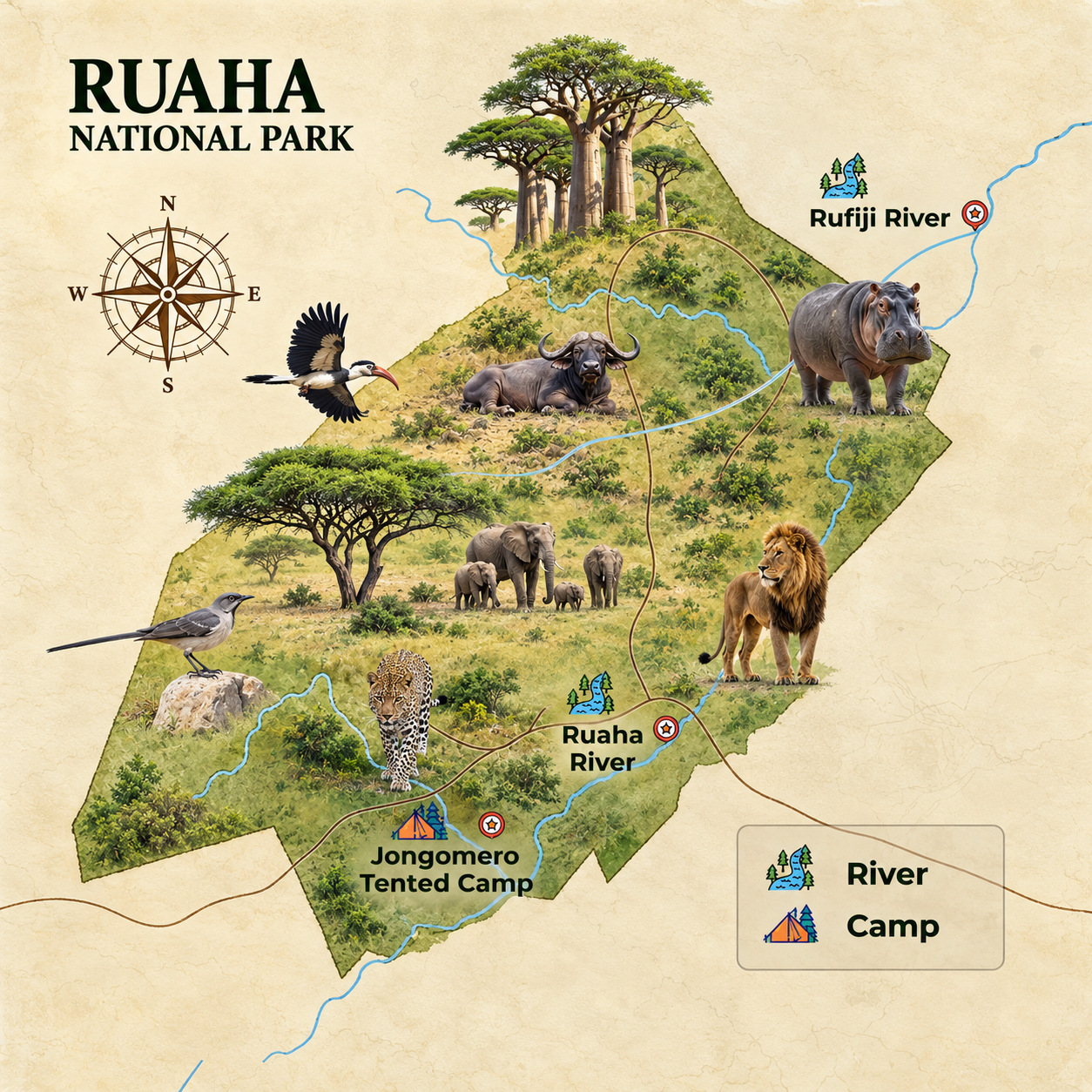
Ruaha National Park is the second-largest national park in Tanzania. The park is rich in wildlife. The park is famous for its elephant population. The park is home to lions, leopards, and cheetahs.
Ruaha River flows through the forest and is the main water source for the wilds in the park. With its deep gorges and swirling rapids, the river attracts diverse wildlife year-round. The national park is home to thousands of elephants, buffaloes, zebras, lions, leopards, and other wildlife species. The national park, with more than 400 bird species, is a birdwatcher’s paradise. Usangu Game Reserve and other wetlands were added to the park, making its size 20,226 km² in 2008.
Total Area
20,226 km²
Elevation
743 - 1,260 m
Classic Experiences
What to Do in Ruaha National Park
Ruaha River
Ruaha River is the primary water source of the downstream ecosystem. Watch the rapid swirls and experience fishing in the river.

Wildlife View

Scenic Beauty

Fishing Adventure
Ruaha Wetlands
The wetland is home to rich biodiversity of flora and fauna across the acacia and savannah. Watch the wildlife roaming freely under the open sky.

Wildlife View

Acacia Trees

Photography
Baobab Trees
Ruaha, Tanzania’s second-largest national park, boasts hundreds to thousands of years-old baobab trees. The trees dominate the landscape and the river.

Baobab Trees

Landscape View

Scenic River View
Birdwatching
Ruaha is an ideal destination for birdwatchers. The park houses 500+ bird species. Spot birds like Ashy Starlings or Red-billed Hornbills.

Birdwatching
Photography
Scenic View
Walking Safari
Go on a walking safari with expert guides for a close wildlife encounter. Dive into an immersive journey amidst the flora and fauna.

Walking Safari

Wildlife View

Guarded Safari
Wildlife Safari
Spot lions, leopards, buffalo, hippos, elephants, giraffes, and African wild dogs. Go on a wildlife safari during the dry months for clearer views.

Game Drive

Wildlife View

Photography
Our Commitment
Exploring Ruaha National Park Responsibly
Experience Ruaha National Park through a wildlife safari and birdwatching experience amid the forest. We ensure the wildlife safari journey stays joyful and doesn’t harm nature.

Sustainable Eco-tourism
Low-impact tourist management helps keep the forest’s delicate balance undisturbed for generations to come. .

Local Community Support
Joining native communities to create alternative livelihoods and start education and conservation of flora and fauna.

Our Commitment
Responsible Tourism
OUR PURPOSE
Protect Tanzanian Species
Tanzania Safaris
Frequently Asked Questions.
The best time to visit Ruaha National Park is the dry season between June and October. The rainy season, between November and April, is best for birdwatchers.
In Ruaha National Park, you can spot bigger mammals including lions, buffalo, and giraffes. You may spot a cheetah and leopards, too. The park houses both spotted hyenas and black-backed jackals. Watch antelopes and kudus across the park.
Yes, Ruaha National Park is quite safe to visit. Don’t provoke the wild animals. Show respect to nature and wildlife. While on safari, always listen to your safari guide and remain safe.
Temperatures drop in the early morning and evening in the national park. Safari travellers must wear warm clothes during game drives. Also, wear cotton pants and comfortable, neutral-coloured clothes on safari. Do carry insect repellent.
In Ruaha National Park, you can enjoy game drives, walking safaris, birdwatching, boat cruises, and fishing.
