

- Home
- »
- Kakamega Forest Reserve
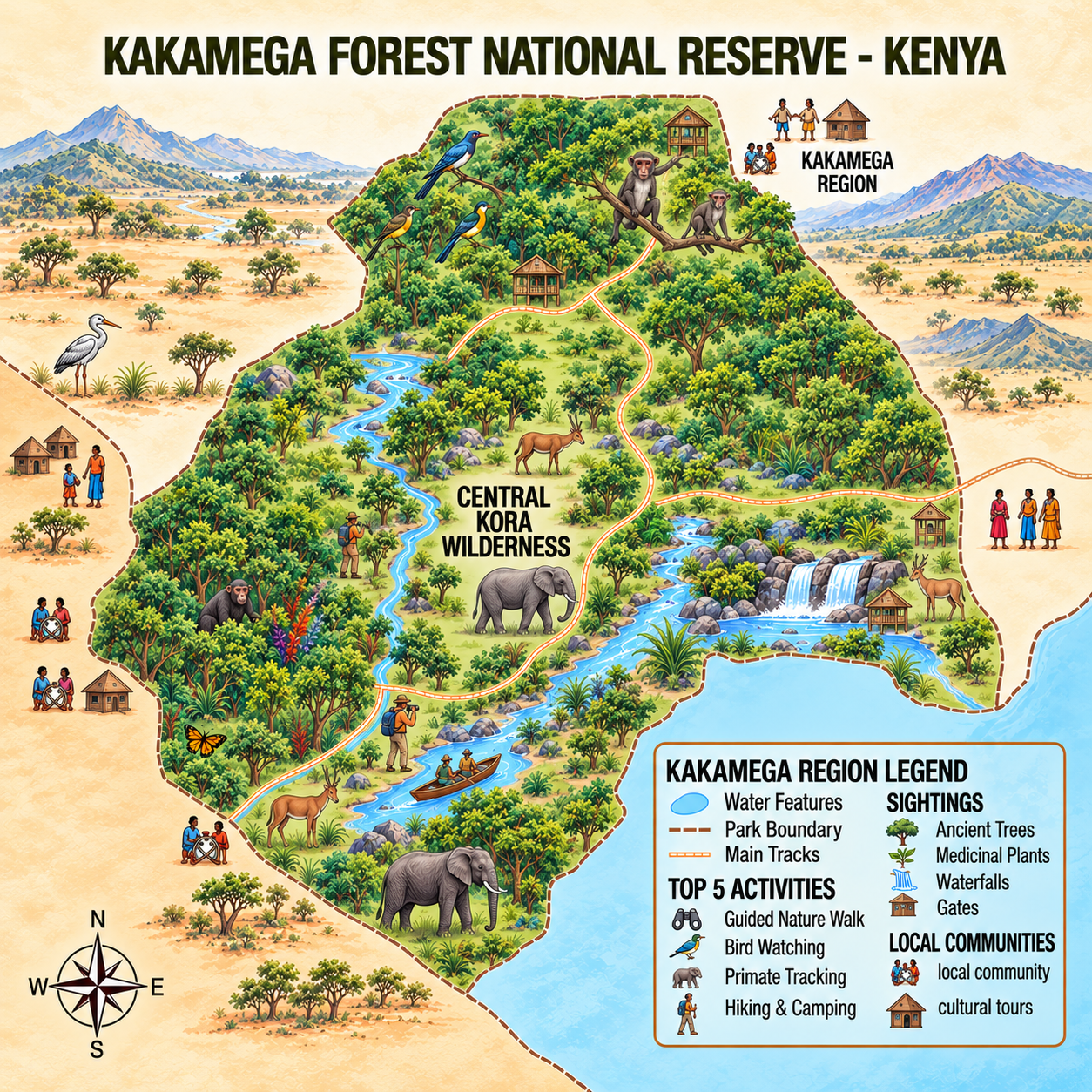
Kenya’s Forests
Immerse in Kenya’s Only Surviving Tropical Rainforest
Want to witness the remaining memory of the old Guinea-Congo rainforest? Kakamega Forest National Reserve in Kenya, is the only vestige of a prehistoric rainforest formation.
Kakamega Forest National Reserve covers an area of around 238 square kilometres, but only half of it remains an indigenous forest. From guided walking tours to birdwatching and photography expeditions, we offer slow and luxurious travel packages for a fully immersive experience. It is home to various rare African species that are found nowhere else in Kenya.
Total Area
1,554 km²
Elevation
0- 1779 m
Signature Experiences
Discover the Vibrant Tropical Rainforest of Kenya
Wildlife Viewing
The tropical rainforest boasts a wealth of wildlife, including mammals, primates, birds, and reptiles.

Small Mammal Viewing

Primate Tracking

Spot Reptile Species
Birdwatching
Over 350 bird species, including 45 unique to that section of the country, are often tracked, monitored, and photographed.

Witness Endangered Species

Watch African Grey Parrot

Photography and Tracking
Guided Nature Walks
The best way to explore the forest canopy is to bring you closer to forest wildlife and semi-adventurous escapades.

Wildlife Viewing

Immersive Travel
Photography Expeditions
Camping
It is one of the nicest ways to camp, with camping grounds available, tranquil surroundings, and a calm atmosphere.

Camping at Night

Total Camping Security

Group Camping
Primate Tracking
Kakamega Forest Reserve is a haven for about seven primate species, whose natural habitat hikers can track.

Diurnal and Nocturnal Species
Rare Primate Species

Endangered Primates
Hiking to Isihuku Waterfalls
Hiking to Isihuku Waterfalls offers a scenic trek through Kenya’s only remaining tropical rainforest.

Waterfalls Viewing

Round Hiking Trip
Photography Expeditions
Our Commitment
Protecting the Only Surviving Tropical Rainforest in Kenya
Kakamega Forest Reserve is home to unique attractions and scenic viewpoints, making it a paradise in Kenya. Our safari expeditions focus on low-impact travel and monitoring the safety of endangered wildlife.

Low-Impact Hiking & Trekking
Our hiking and trekking operations involve low-impact travel without leaving any waste or harming flora or fauna.

Sustainable Camping Operations
Stay in an eco-friendly, cost-effective way to protect endangered flora and fauna.
Our Commitment
Responsible Tourism
OUR PURPOSE
Protect Kenyan Species
Kenya Safaris
Frequently Asked Questions.
The dry periods from June to August and December to February are the best times to visit Kakamega Forest Reserve. These months are best for hiking, trekking, and wildlife tracking, as the canopy thins, making it easier to spot wildlife, and the trails are less muddy.
Reach Kisumu International Airport (KIS0 from Nairobi, which takes approximately 55 minutes. Then, take a matatu (minibus) north to Kakamega town. From the town, hire a local taxi or motorcycle (boda-boda) for the remaining 18km to the forest station.
No. You cannot see the traditional Big Five (lions, elephants, rhinos, leopards, buffalo) in this forest. This tropical rainforest is home to diverse birds, primates, insects, small mammals and flora.
You can participate in hiking and trekking, primate tracking, guided nature walks, birdwatching, photography tours and camping tours.
Kakamega Forest Reserve requires a $50 entry fee, which will be included in your package at the time of booking. Details of hiking, trekking and camping equipments will be conveyed to you at the time of booking.
