

- Home
- »
- Mount Kilimanjaro National Park
Visit Mt. Kilimanjaro National Park
Explore Trekking Adventures at Mt. Kilimanjaro
Kilimanjaro National Park is home to diverse wildlife and bird species. The world’s tallest free-standing mountain, Mount Kilimanjaro is also Africa’s highest mountain.
Every year, thousands of climbers and adventurers from across the globe come to climb the mountain peak. The altitude and rate of ascent make the journey extremely challenging, yet highly rewarding. Mount Kilimanjaro has been recognised as a UNESCO World Heritage Site in 1987 for its scenic beauty. The safari park protects the world’s largest free-standing pass, surrounded by forests, grasslands, and moorlands.
Total Area
1,688 km²
Elevation
1,700 - 5,895 m
Classic Experiences
What to Do at Mt. Kilimanjaro National Park
Mount Kilimanjaro
Mount Kilimanjaro is the highest peak in Africa, with its stunning views, adventures, and diverse contours.

Mountain View

Trekking Experience

Rich Biodiversity
Wildlife Safari
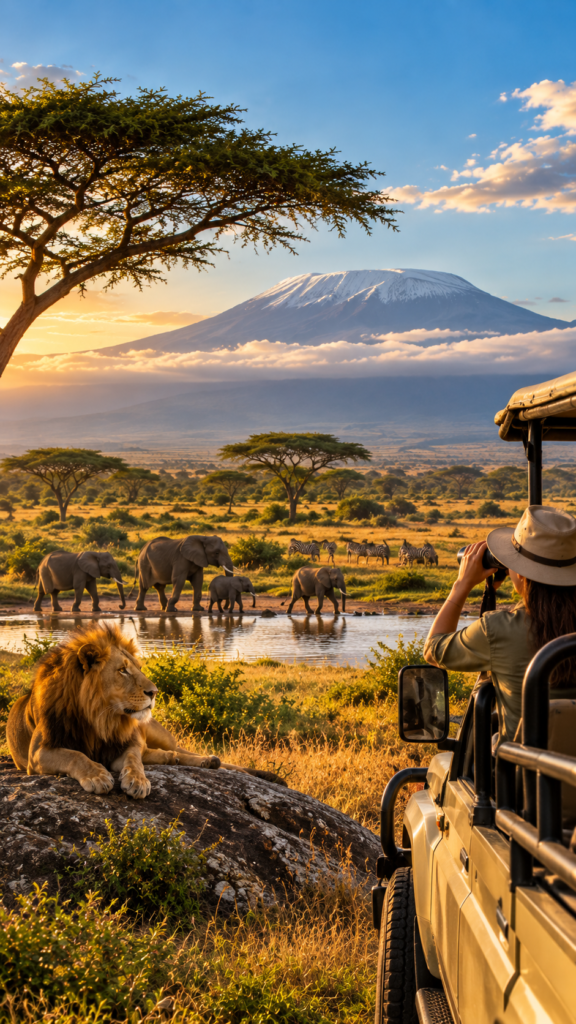
Experience wildlife encounters and spot animals like elephants, antelopes, buffalo, colobus monkeys, elands, etc.

Game Drive

Hiking & Trekking

Scenic View
Trekking Journey
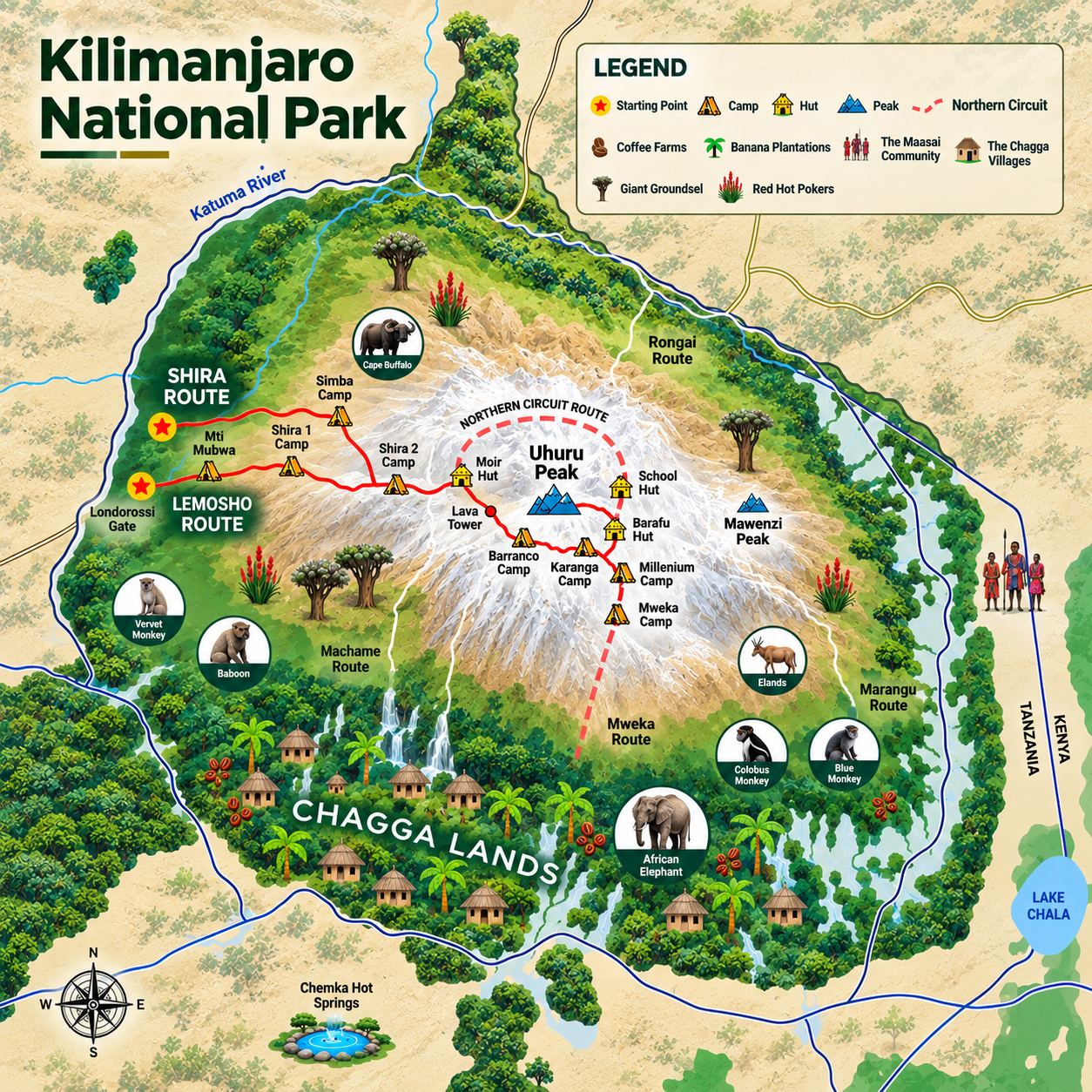
Climb Mt. Kilimanjaro via various routes like Lemosho, Shira, and Northern Circuit while enjoying wildlife and scenic views.
Trekking

Scenic View

Photography Safari
Mountain Flora
Explore rich plant species like senecio, giant groundsel, red hot pokers, Lobelia, moorland, and semi-alpine species.

Tropical Rainforests

Variety of Flora

Birdwatching
Scenic Views
Enjoy panoramic views from the mountain summit. Lush green rainforests welcome you to this wildlife haven.

Panoramic View
Bird Watching
Photography
Cultural Tours
Dive into the Tanzanian tribal heritage. Meet the local Chagga and Maasai people and explore their culture.

Tribal Tradition

Coffee Brewery Tours

Maasai Culture
Our Commitment
Exploring Mt. Kilimanjaro National Park Responsibly
Experience your tour to Mt. Kilimanjaro National Park through a wildlife safari to the conservation area. We ensure the wildlife safari journey stays joyful and doesn’t harm nature.

Sustainable Eco-tourism
Low-impact tourist management helps keep the forest’s delicate balance undisturbed for generations to come.

Local Community Support
Joining native communities to create alternative livelihoods and start education and conservation of flora and fauna.
Our Commitment
Responsible Tourism
OUR PURPOSE
Protect Tanzanian Species
Tanzania Safaris
Frequently Asked Questions.
You can see African elephants, giraffes, different species of monkeys (blue monkeys and black-and-white colobus monkeys), serval cats, bushbucks and duikers, and cape buffalo in the lower part of the climbing route in the national park. You can rarely spot predators on the trekking routes. Higher up, the base is mostly known for its scenic beauty.
Climbing Mt. Kilimanjaro takes you through five different ecological zones, like rainforest, moorland, cultivated land, alpine desert, and the arctic summit.
The best time to visit Mount Kilimanjaro National Park is during the dry seasons between January and March and June and October, when temperatures are moderate and skies are clear. Many trekkers come to the safari destination from different corners of the world.
You can access accommodation options like mountain huts on the trails. Trekkers can also stay in lodges and camps near the park gate. With Safarizo, experience the best of nature in Kilimanjaro National Park amidst the wild, with the necessary safety and comfort.
Warm layers are a must. As you head toward the summit from the lower forest zone, temperatures can be chilly at the arctic summit. Carry thermals, a heavy down jacket, a mid-layer fleece, a windproof jacket, woolen socks, hiking boots, thin sock liners, etc. Also, pack a wide-brimmed hat and sunglasses to protect against the alpine sun. Talk to your guide beforehand while packing your essentials for the safari journey.
