

- Home
- »
- Nairobi National Park
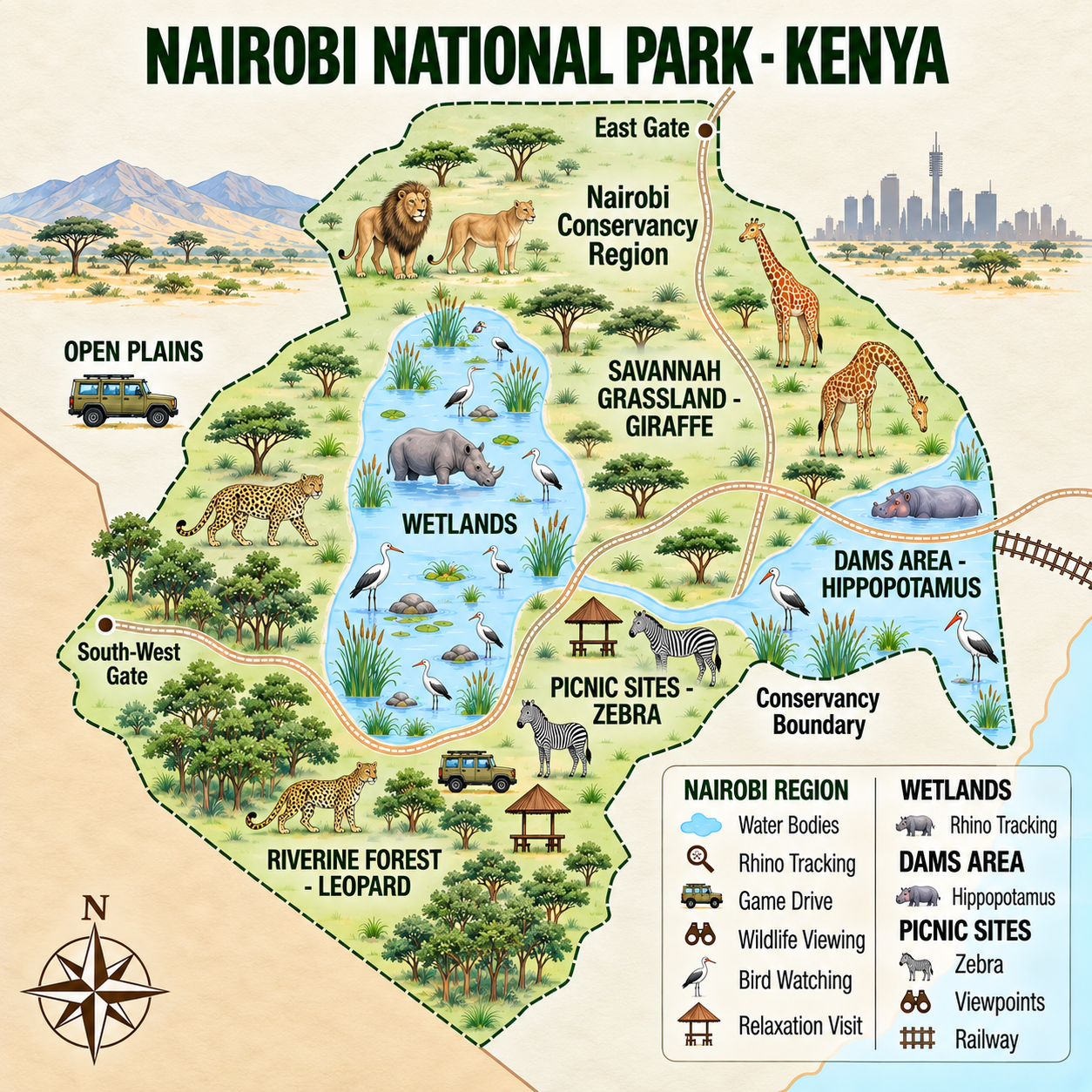
Kenya's National Parks
Visit Kenya’s Urban-Edge National Park
This unique natural reserve, effectively a national park, shows a startling blend of two worlds, with one motto: survival and life.
Nairobi National Park is home to one of Kenya’s most important rhino conservation landscapes and was Kenya’s first gazetted national park in 1946. Previously known as Royal Naorobi National Park, this destination shelters a wide array of wildlife, including cheetahs, gazelles, hyenas, impala, zebra, ostrich, and more, all coexisting in their natural environment.
Total Area
117.21 km²
Elevation
1533- 1760 m
Signature Experiences
Explore the Urban National Park of Kenya
Spot Endangered Black Rhinos
Nairobi National Park is known for its dense population of black rhinos. The protected breeding program reflects ethical conservation.

Black Rhinos

Ethical Tourism

Immersive Tours
Watch Big Five Upfront
Take a game drive to see the Big Five (lion, leopard, elephant, rhinos, and cape buffalo) along with other wildlife.

4×4 Game Drives

Photography Tours

Guided Tours
David Sheldrick Elephant Orphanage
This sanctuary within the park rescues and adopts injured and orphaned baby elephants and rhinos, along with their young ones.

Wildlife Viewing
Ethical Tours

Immersive Experiences
Ivory Burning Site Monument
As per History, Kenya’s leaders saw the symbolic burning of tons of contraband ivory, which is memorialised as Kenya’s commitment to stop the ivory trade.

Cultural Heritage Tours
Ethical Tourism
Immersive Experience
Wildebeest & Zebra Migration
Watch millions of wildebeest and zebra cross the Mara River of Kenya from the southern Serengeti, marking the Great Wildebeest Migration.

Migrating Animals

Predator Sightings
4×4 Game Drives
Birdwatching
Over 400 bird species are recorded in this safari park, making it one of Kenya’s best birdwatching destinations.

Spot Rare Birds
Photography Tours
Ethical Safari
Our Commitment
Protecting the Urban National Park of Kenya
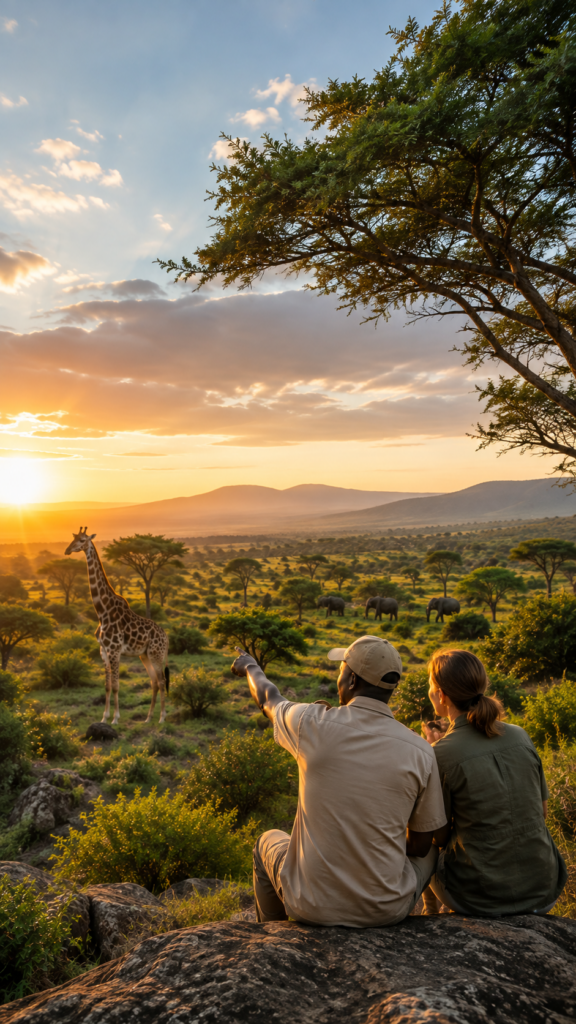
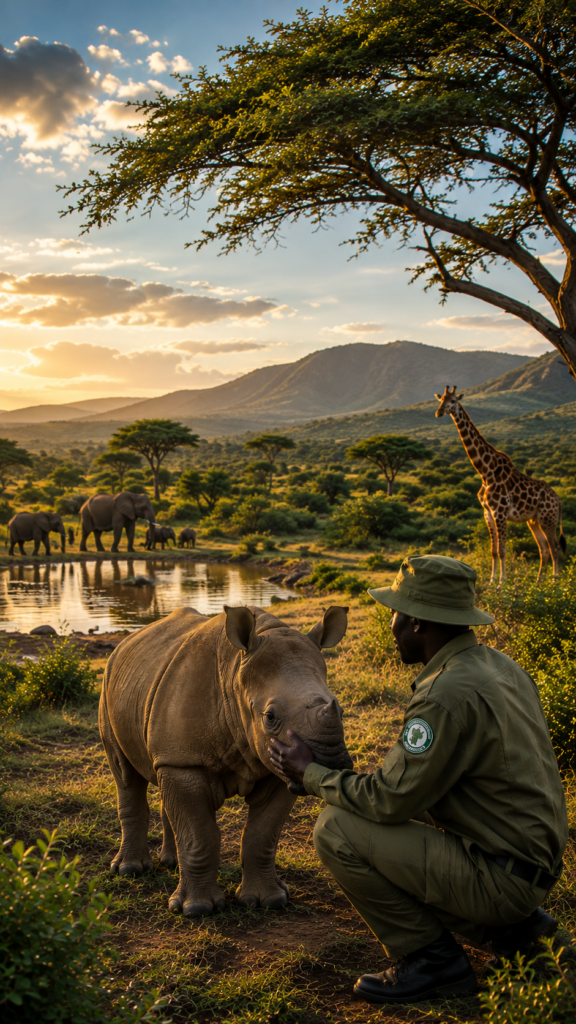
Nairobi National Park is an urban-edge savannah and a Kifaru Ark for rhino conservation, and is notable for sheltering orphaned rhinos. At Safarizo, we collaborate with local communities and conservation organisations for a responsible safari experience.

Sustainable Eco-tourism
Low-impact visitor management helps ensure critically endangered black rhinos and other wildlife remain undisturbed for generations.

Local Community Support
Partnering with the national park’s authority to create alternative livelihoods for indigenous communities and conservation education for eco-sensitive tourism.
Our Commitment
Responsible Tourism
OUR PURPOSE
Protect Kenyan Species
Kenya Safaris
Frequently Asked Questions.
The ideal time to visit Nairobi National Park is between the dry seasons, from June to October and January to February, when it's easier to see wildlife because vegetation is scarce and watering holes dry up.
The best time of day to visit is between 6:00 AM and 11:00 PM, with early mornings offering good sunrise views and less congestion.
Our team will provide private transfers from your hotel to the national park gate and back. It takes approximately 20 to 40 minutes to reach the destination by road.
Near the Ivory Burning Site monument, there are Boma settlements where you can watch traditional dances.
- East African Citizen Adult: KES 1,000
- East African Citizen Child/Student: KES 500
- Kenya Resident Adult: KES 1,350
- Kenya Resident Child: KES 675
- International Non-Resident Adult: USD 80
- International Non-Resident Child: USD 40
- African Citizen Adult: USD 40
- African Citizen Child: USD 20
