

- Home
- »
- Taita Hills Wildlife Sanctuary
Kenya’s Sanctuaries
Discover the Gem of Kenya’s Tsavo National Park
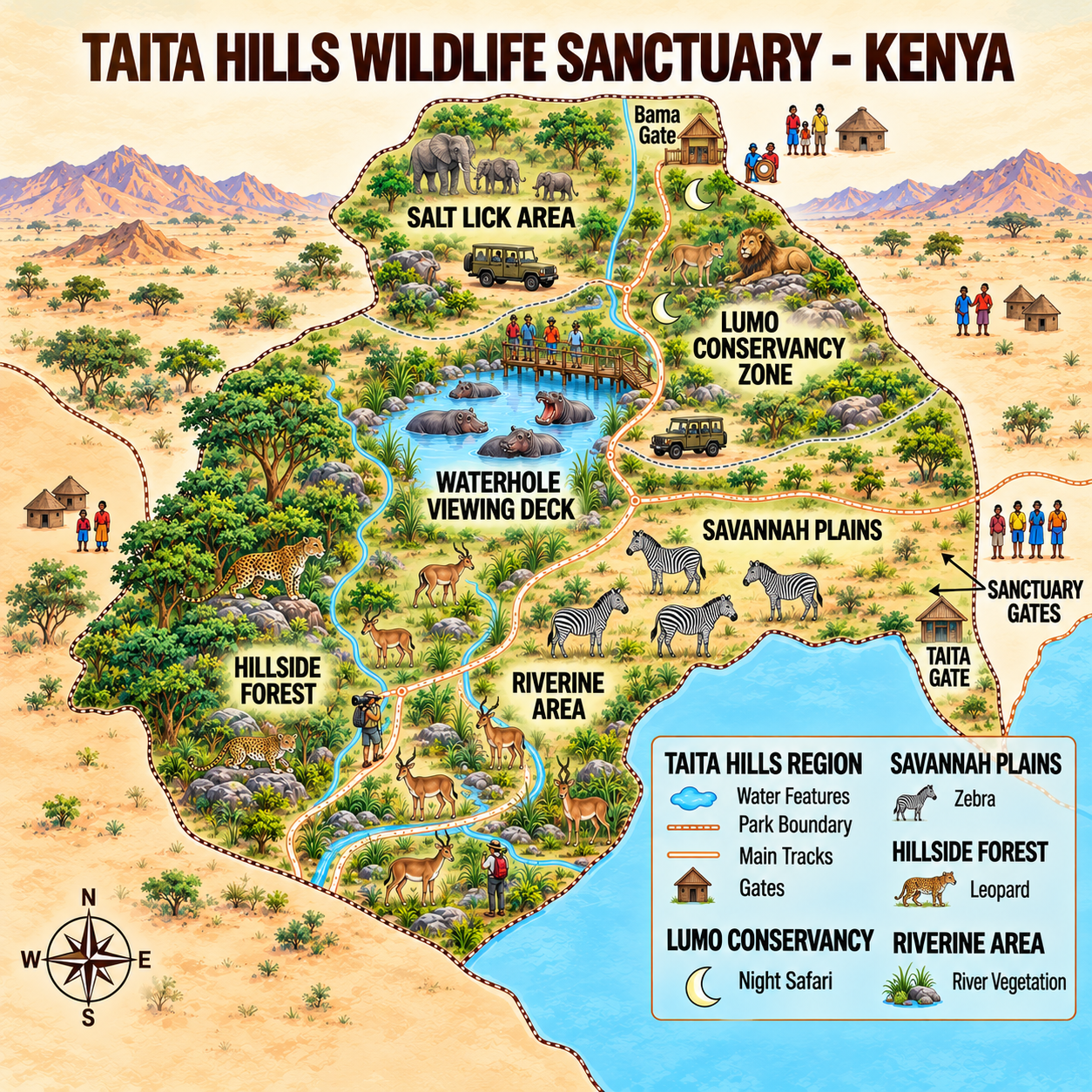
Taita Hills Wildlife Sanctuary (THWS) straddles the famous Tsavo National Park and serves as an important dispersal area and migration corridor for wildlife between East and West Tsavo.
THWS’s topography is generally mountainous, offering breathtaking views of Mount Kilimanjaro, the Pare Mountains, the Uluguru Mountains, and the Taita Hills. This region has more than 50 species of large mammals and over 300 species of birds recorded. The sanctuary mostly covers riverine forests, savannah woodland and grasslands, sheltering a major section of Kenya’s biodiversity.
Total Area
113 km²
Elevation
974 - 1,200 m
Signature Experiences
Explore the Sanctuary of Wonders in Tsavo National Park
Game Viewing
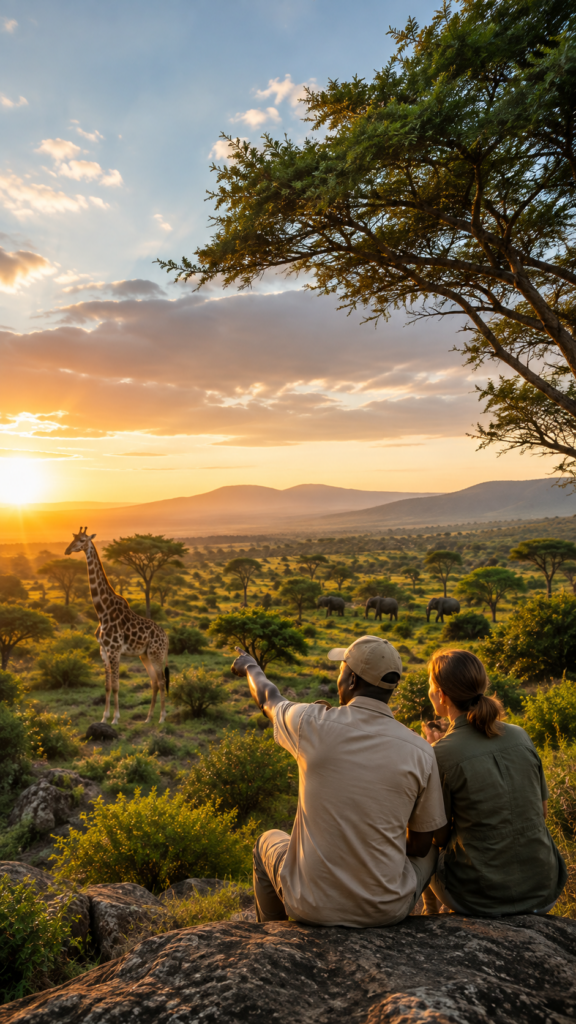
Early morning and afternoon game drives provide an ideal opportunity to view and photograph diverse wildlife species within the sanctuary.

4×4 Safari Vehicles

Big Five Tours

Photography Safaris
Conservation
Visitors supplement natural regeneration through tree planting of indigenous species, and the local community is included to build conservation awareness.

Responsible Tourism

Tree Plantation

Protect Indigenous Species
Tsavo Run
Tsavo Run is an annual fundraiser held within the Tsavo ecosystem and functions as a project under the Tsavo Heritage Foundation’s fundraising programs.
Protect Biodiversity

Protect Water Sources

Protect Indigenous Cultures
Mzima Springs
Mzima Springs, a natural oasis within the sanctuary, offers crystal-clear waters and a unique underwater view of hippos and crocodiles.

Watch Hippos

Spot Vervet Monkeys

Birdwatching Tours
Walking Safaris
Explore the sanctuary’s natural beauty on foot with walking safaris, providing an intimate encounter with flora and fauna.

Spot Small Wildlife

Feed Wild Giraffes

Birdwatching Tours
Birdwatching
Taita Hills Wildlife Sanctuary is a birdwatcher’s paradise, hosting over 390 bird species, which can be best enjoyed during early mornings and later afternoons.

Spot Rare Birds
Photography Opportunities

Visit Mother Tree
Our Commitment
Preserve Kenya’s Biodiversity Hotspots in Ancient Hills
Taita Hills Wildlife Sanctuary is ecologically important as a crucial migratory corridor between Tsavo East and Tsavo West National Parks. At Ssafarizo, we deliver nature education responsibly and collaborate with local authorities to raise awareness of tree planting, animal conservation, and responsible tourism.

Sustainable Eco-Tourism
Low-impact visitor management to ensure that endangered birds, small mammals, and other wildlife remain undisturbed for generations.

Local Community Support
Partnering with the sanctuary’s authority to create alternative livelihoods and conservation education for responsible tourism.
Our Commitment
Ranger Patrols Monthly
600+
Plant Species Documented
Kenya Safaris
Frequently Asked Questions.
The best time to visit Taita Hills Wildlife Sanctuary is during the dry season from June to October and January to February. During these months, sparse vegetation and animals gathering at waterholes make wildlife viewing optimal.
The best times of day to visit Taita Hills Wildlife Sanctuary for game viewing are early morning, from 6:30 AM to 9:30 AM, and late afternoon, from 3:30 PM to 6:30 PM. During these cooler hours, animals are most active, and predators like lions and leopards are easier to spot.
Taita Hills Wildlife Sanctuary in Kenya is accessible by road or air via Nairobi, Mombasa, or the nearby town of Voi. Driving takes 3 to 4 hours from Mombasa (120 km) or 5 to 6 hours from Nairobi (300–370 km) along the Nairobi-Mombasa highway. You can also take a train to Voi or a charter flight to local airstrips.
Taita Hills hosts over 50 large mammal species, including elephants, lions, leopards, and giraffes, and roughly 300 to 390 bird species.
The entry requirements and fees to Taita Hills Wildlife Sanctuary are as follows:
- Non-Resident Adults: USD 40 per day
- Non-Resident Children (Ages 5–11): USD 20 per day
- East African Resident Adults: KES 500 – 600 per day
- East African Resident Children (Ages 5–11): KES 250 – 300 per day
- Children under 5: Free
